A Brief History of Searching

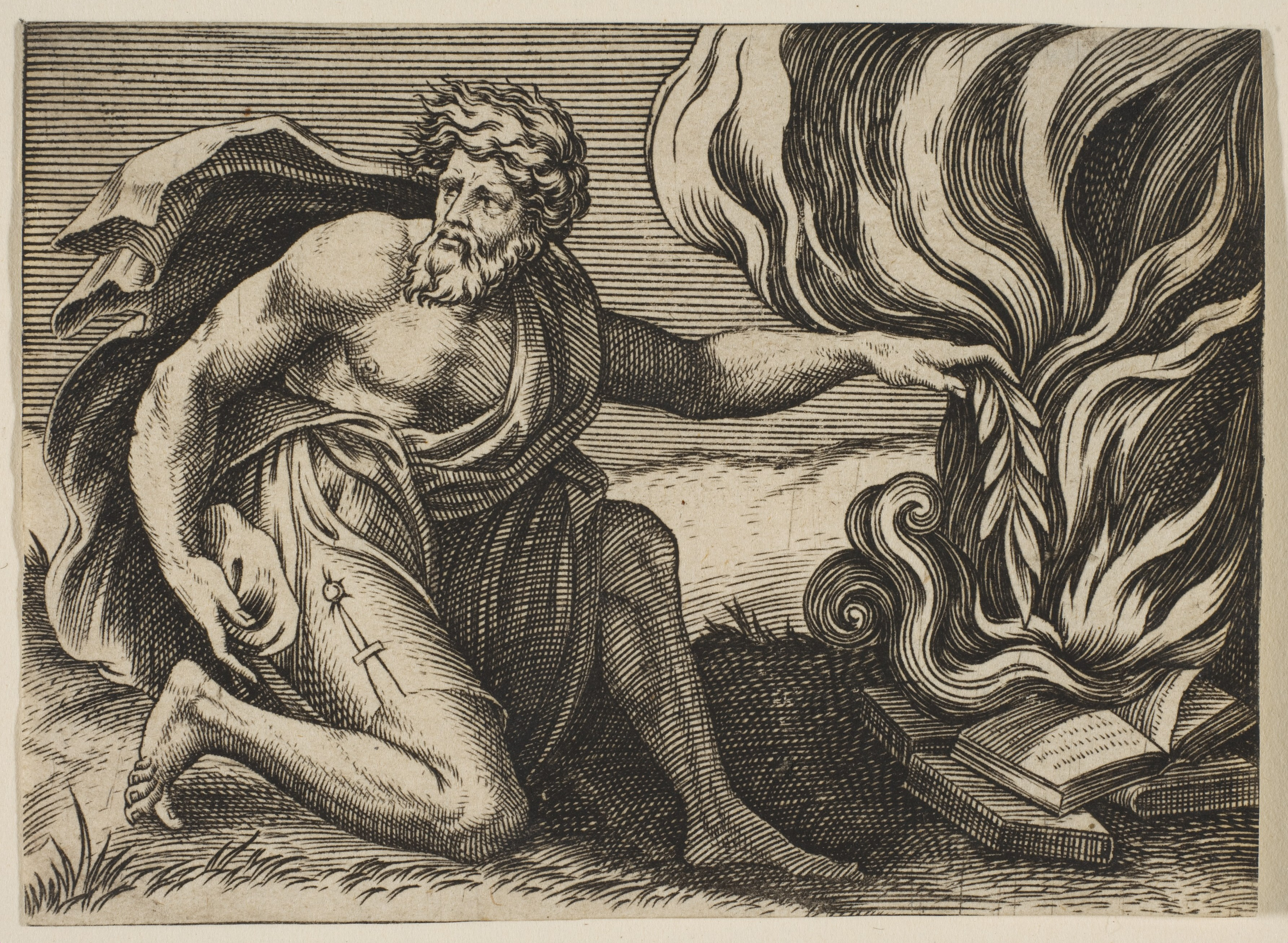
For most of our history, finding an answer meant finding a person who you could pose questions to, and then persuading them to share their thoughts. Knowledge often accumulated and lived in institutions and with experts: the healer, the local official, the trader, the teacher. And what you could learn depended on where you lived, who you knew, and what you sought out.
Information seekers pre-date literacy and became super-powered with the rise of the internet. Humans need information to learn, decide and form opinions. And they are curious.
Text changed the game. It meant that information could persist and travel. Memory was not just held personally, and was captured by infrastructure. Knowledge became portable, copyable, and deletable. And debate became more rational, since you could point to a text and argue about its meaning.
Text also forced a new problem into existence. If you can store ideas, it must decided what is to be made available. Who can access it, and on what terms? What should people be allowed to discover?
There are important lessons to be learned when we take a look at a brief history of information searching.
Ledgers and Databases
The early story of text is not a romance of great books. It was as an operations manual for civilisation.
The first durable text systems were administrative: inventories, accounts, obligations, names, quantities. Their power lay not in preserving language, but in preserving state: who owes what? what has been delivered? what is permitted? what is missing? Once a society writes things down, it immediately faces a mundane but decisive question: how do you retrieve a specific fact from a growing pile of records?
This is where information seeking became technical. A ledger is not merely content; it is a structure that anticipates scanning, comparison and dispute. It relies on repeated formats and consistent ordering, which means it can be used by someone who did not write it, and by someone whose interest in it may be hostile.
That last point matters. Ledgers exist to settle conflicts. That makes them instruments of power as well as memory. Text does not merely record the world; it assigns permissions within it. If the record is what counts, then the person who controls the record controls the past, and often the future too. A register can define who belongs. A list can decide who is taxable, conscriptable, eligible and suspect.
The modern version of this is rarely a ledger in an archive. It is a database field that makes you legible to a system, and therefore governable by it, whether the system is a state, a platform, or a partnership between the two.
Books and Indexing
For centuries consulting text remained stubbornly physical. You did not “look things up” so much as you travelled to where the writing lived. That location mattered because access could be managed, priced, delayed, or denied.
Information seeking was shaped by a deceptively simple design choice: whether text should be rolled or paged. A scroll is elegant, but it is linear. A bound book, the codex, turned reading into navigation. Pages are a location; a location then enables a reference; and that reference enables retrieval. Once you have that, a whole interface layer follows: headings, page numbers, marginal notes, and tables of contents.
The index was the key piece of that layer. It treated the book as a database of concepts and assumed the reader was not merely consuming, but querying. It also reveals a truth that has never gone away: the reality that organisation is interpretation. Choosing what gets indexed, which terms become synonyms, and which concepts deserve their own entry is not neutral work, even when it pretends to be.
This becomes especially obvious in a multilingual context. What is searchable in one language may be awkward in another. Minority community terms become “findable” through labels imposed by outsiders. Diversity becomes a retrieval problem with consequences.
Citations and Classification
Long before hyperlinks, text learned to become a network through citation.
Citations are often taught as manners, but they are routing instructions. They allow a reader to move from claim to provenance, from interpretation to evidence, and from one text to a constellation of others. Once citation becomes normal, information seeking changes shape. The question is no longer just; what does this say? It becomes; what else connects to this? And crucially; what is being left out?
That last question is where power enters again, because citation does not only connect. It also excludes. It formalises legitimacy. It tells you what counts as a source and who is worth quoting. And it can easily become a closed circuit in which a system recognises only itself.
Catalogues and classification schemes scale this up. When print expands, societies build tools to keep it searchable: bibliographies, abstracts, subject headings, controlled vocabularies. These make discovery possible at scale, but they also encode worldviews into the machinery of retrieval. Categories decide what can be browsed, and browsing decides what can be discovered. In practice, that means the politics of public life is embedded in the filing system.
Mass Distribution and Mass Influence
Printing made knowledge scalable. It also made persuasion scalable, because distribution is power and repetition is a kind of force.
When you can flood a public with text, you do not merely inform it. You can steer it by choosing headlines, omitting context, and shaping what becomes familiar through relentless exposure. The provider does not need to be omniscient to be influential. What matters is reach and the ability to set the frame before anyone else arrives.
Where text flows, control follows. Censorship regimes are, in a sense, negative search engines: they decide what cannot be found. Licences, approvals, bans, and blacklists become retrieval constraints enforced by the state, by religious authority, by publishers, and now by platforms. The public is not merely seeking information; it is seeking it through choke points that can be tightened when convenient.
Europe’s history in particular shows us how information infrastructure is never neutral, and people pay when they forget to ask who controls access.
Digitisation Democratised and Centralised
Digitisation does not merely speed up the old moves. It changes who can ask and where you can ask. The web enabled anyone, anywhere. The same search box, used by someone in Beijing, Berlin, Bengaluru or Boston may look identical, but the expectations behind it are not. So in some countries a modern rights tradition treats privacy and dignity as constraints on power, rather than conveniences to be traded away. Some cultures talk about consumer choice; others talk about fundamental rights. Now we are seeing more and more countries seeking to control access and availability.
Once text became data, retrieval became matching and ranking performed at machine speed. Queries shrank, iteration accelerated, and a new literacy emerged. Web links became machine-readable signals that can be counted, weighted, and turned into rankings. Search was no longer about catalogue navigation. It became an algorithmic judgement about relevance.
This is where power gained camouflage. A results list looks like reality, but it is a constructed view of reality. Providers choose what is indexed, how often it is refreshed, what is demoted, what is boosted, and what counts as “low quality”. They choose which sources are treated as authoritative and which topics trigger special handling. Some of these choices are defensible. Many are necessary.
But the most significant recent shift is arguably not in ranking. It is in observation. It is the power of surveillance, so often sugar-coated with convenience.
Historically, text offered a particular kind of privacy. You could consult a book without broadcasting your curiosity. You could browse without leaving a trail. In that world seeking was personal, and the record was the text itself. At scale, many modern systems invert this. If you are not using Mojeek your query probably becomes behavioural data. And a sequence of searches becomes a profile.
The New Walled Gardens and Freedom
Now the interface itself is shifting again. AI platforms are being hyped as the end of searching. One answer, neatly phrased, with none of the friction of reading across sources. The promise is convenience. The risk is deeper capture.
In a web of links, search is a boundary-hopping habit. In a walled garden, the idea is to keep you captured, because inside is where measurement, monetisation, and lock-in are easiest. AI platforms are the new walled gardens.
The question is not whether AI can be useful. It obviously can be. The question is whether the experience of information seeking becomes more open or less. AI will make it less open if we become mediated by a small number of systems that decide what you see and how you see it.
With AI you ask a question and receive an answer that reads like authority, even when it is compressing uncertainty, blending sources, or smoothing over disagreement. Convenience removes the work that search forces on you. The work of comparison, judgement and source-checking is discouraged. And the uncomfortable sight of experts disagreeing in public disappears. That friction is not a bug. It is the erosion of your autonomy.
Freedom to Seek
Search, at its best, is decentralising. It teaches triangulation. It exposes you to difference, including perspectives you did not know existed. It also gives you an audit trail. You can follow a link, and read the primary text. The text of a creator. A creator who can then get fair credit.
The history of text is not just the history of recorded knowledge. It is the history of a quiet freedom. The vital freedom to pursue a question to its conclusion, to the source material and without being watched. The Freedom to Seek.
